Year 1, Year 2, Final
Final NOLA C.A.R.E.S. Metrics
Data collection for the NOLA C.A.R.E.S. project concluded at the end of 2025, but several of these programs continue to serve participants and make change. This dashboard reflects project metrics for 2022, 2023, and 2024. The page is organized around the metrics established by JP Morgan Chase, the project funder, for their Advancing Cities projects. The metric definition indicates how the metric is interpreted in light of the unique NOLA C.A.R.E.S. programming, and has been approved by JPMC and the collaborative. Notes share additional data and analysis particular to this project.
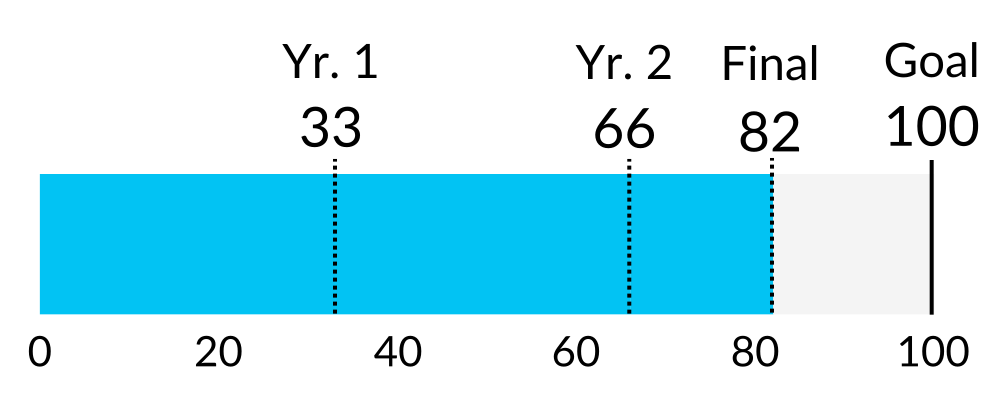
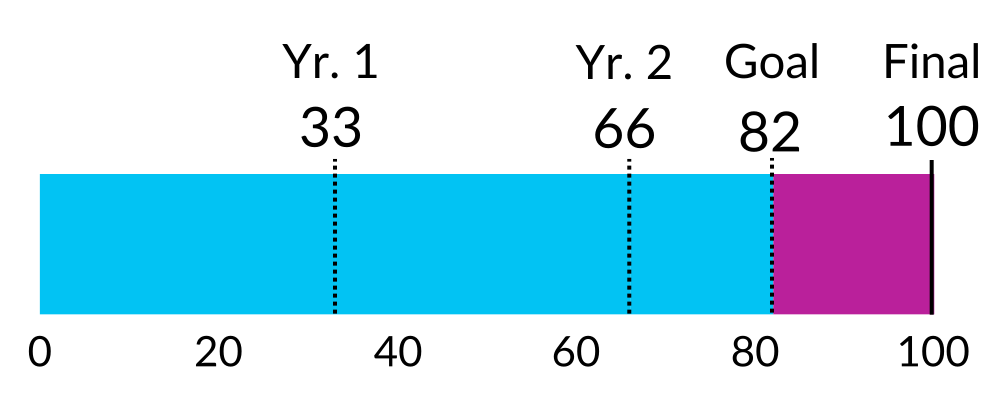
How to read the indicator charts.
- Data is cumulative, the final total is represented in blue.
- All data is directly labeled.
- If goal has not been reached a gray bar will be shown.
- If goal has been reached, or there is no goal, no gray bar will be shown.
- If results are above the goal, a purple bar will be shown.
Jobs & Skills
Indicator 4
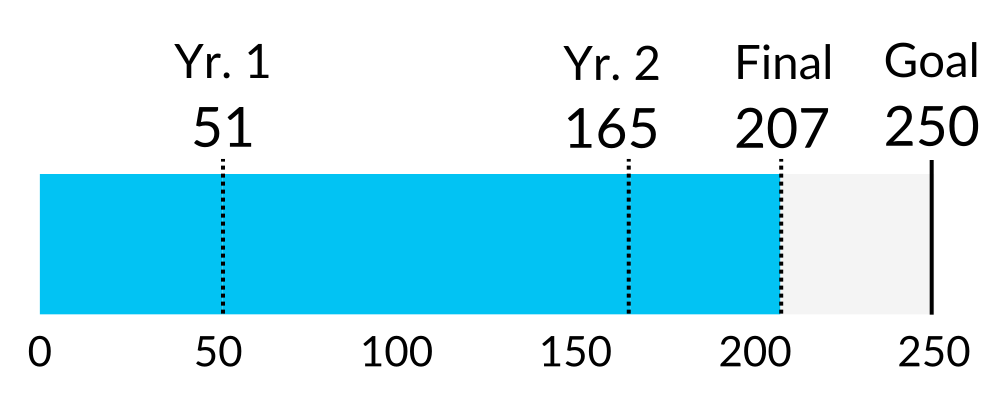
Number of people enrolled in further skills training.
Number of people enrolled in Beloved Community – Equity at Work cohort.
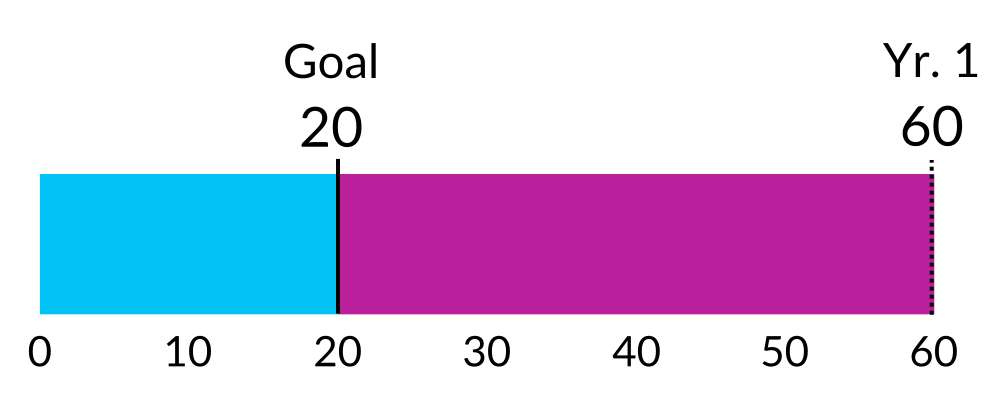
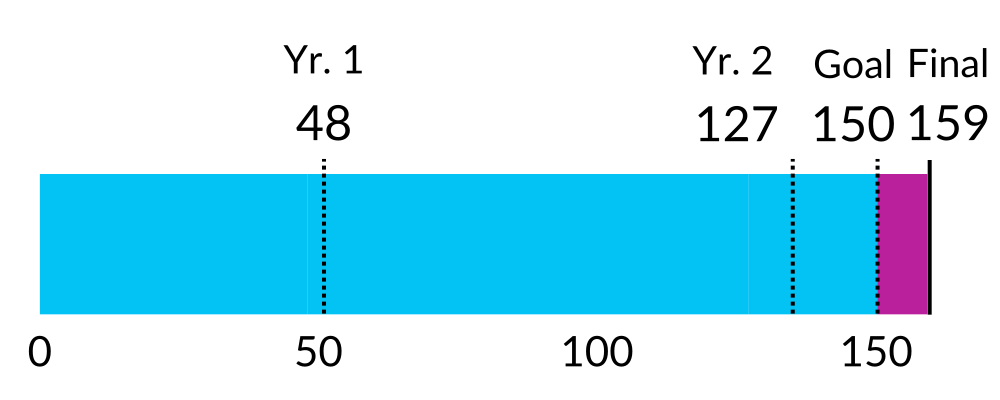
Final numbers show the project approaching — and in some cases exceeding — its goals for engaging participants.
Data collection for the NOLA C.A.R.E.S. project concluded at the end of 2025, but several of these programs continue to serve participants and make change. This dashboard reflects project metrics for 2022, 2023, and 2024.
Indicator 5
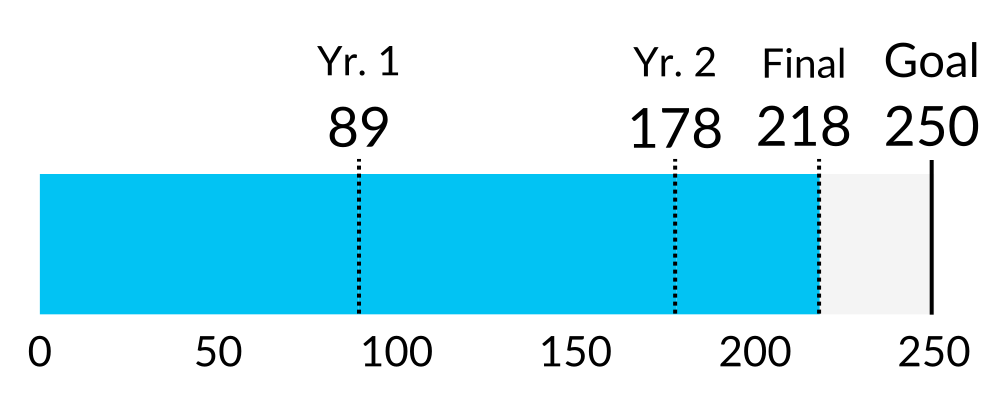
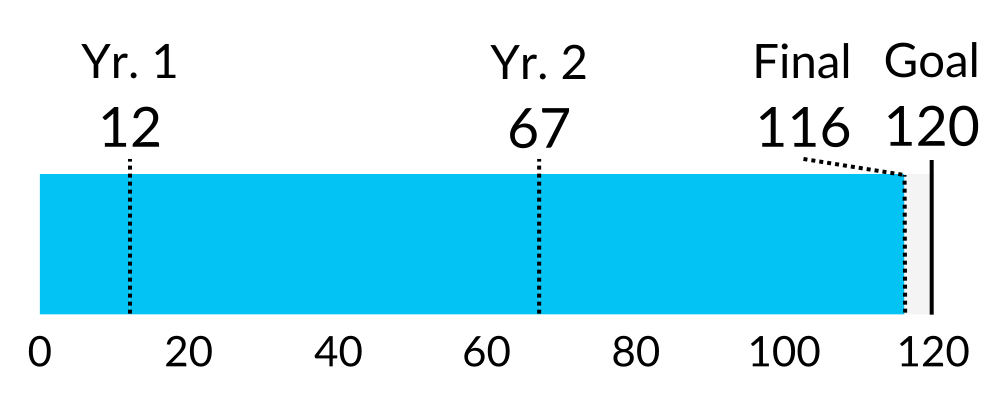
Number of people completing training.
Number of people who complete the CDA curriculum, plus the number of people who complete training in PAR, plus the number of people who complete the Equity at Work cohort.
Indicator 6
Number of people earning credentials, certifications or licensure.
Number of people who attain their Child Development Associate (CDA) Credential.
Indicator 7
Number of people placed into apprenticeships.
Number of people who enroll in a NOLA C.A.R.E.S. CDA program and gain experience working in early learning centers, plus the number of people who train in and practice Participatory Action Research (PAR).
The NOLA C.A.R.E.S. CDA credential program opened doors for nearly 200 teachers to higher wages, more professional opportunity, and increased personal confidence in their role.
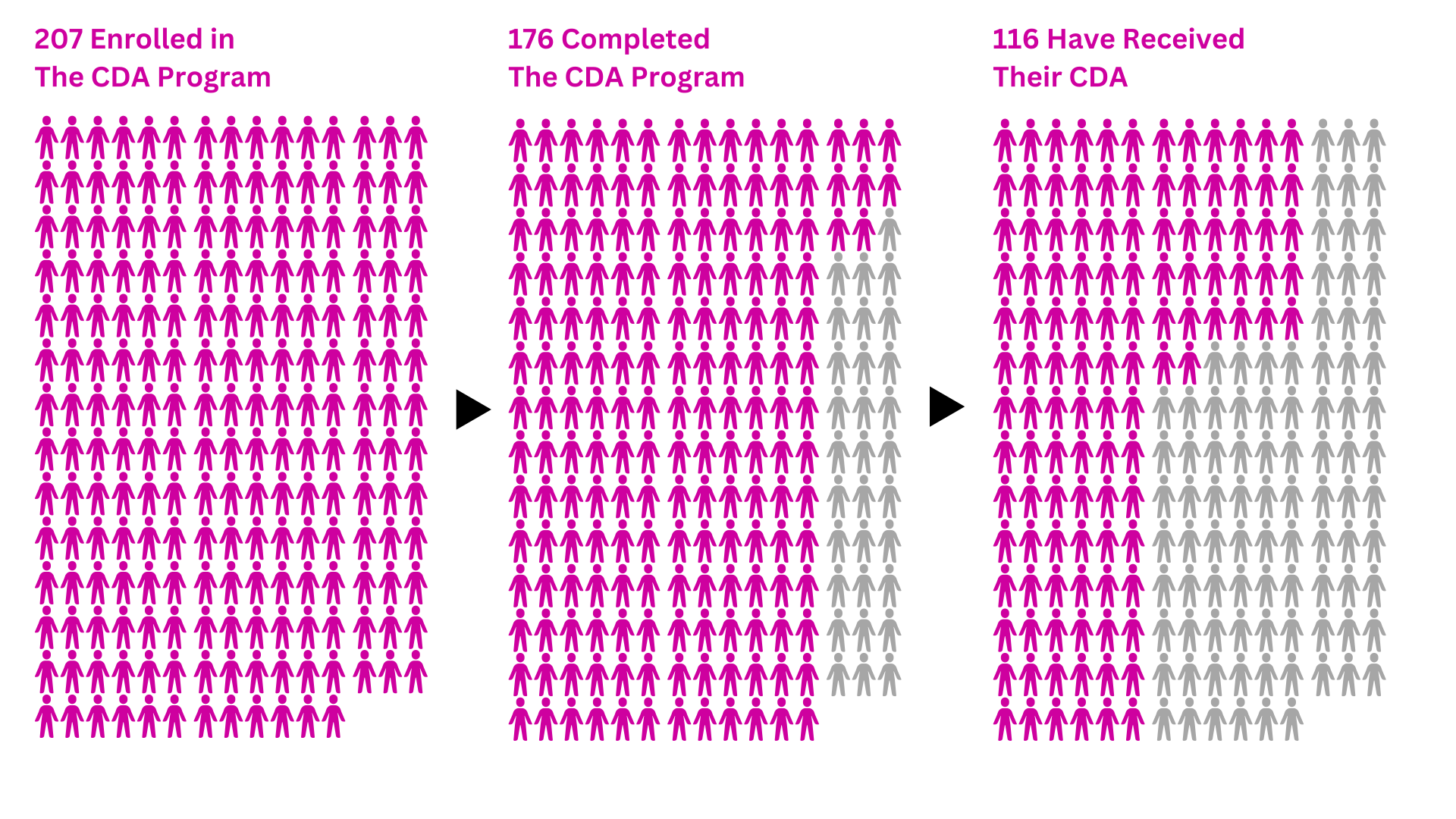
Credentialing programs for ECE workers served an additional 42 women in 2024, bringing the total number served by the project to 176. Program retention rates continued to be high, with 116 Black and Latine women having already earned their credential by the close of 2024. All but 6 of the 31 people who enrolled in Participatory Action Research training have met the threshhold for program completion, and several have continued on in the program to deepen their research, advocate for policy change, and guide others new to the practice.
Indicator 8
Number of people placed into part-time employment.
Number of CDA candidates employed part time in an ECE center during or after their CDA program.

Indicator 9
Number of people placed into full-time employment.
Number of CDA candidates employed full time in an ECE center during or after their CDA program.
Indicator 10
Average wage for individuals served.
Sum of starting or current wage of all CDA program participants divided by total number of CDA participants placed into employment.
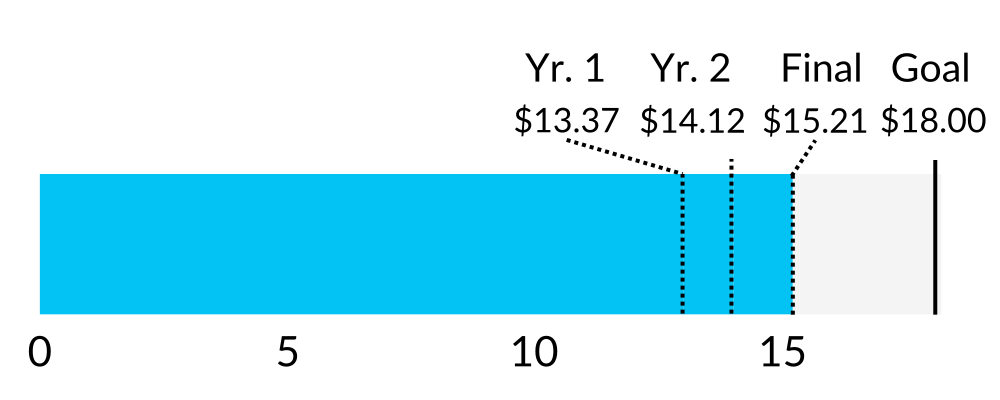
Many teachers received significant wage increases after acquiring their CDA.
Of the 90 participants who received a raise upon acquiring their CDA, the most common wage entering the program was $12/hour. The most common wage after increase was $18/hour. Maintaining access to programs like this is essential to solving workforce issues in ECE.
Indicator 11
Retention rate at 90 days.
Percentage of CDA candidates still employed 90 days after the beginning of the program.

Indicator 12
Number of individuals served.
The total number of individuals who have enrolled in a NOLA C.A.R.E.S. CDA, PAR, or Equity at Work program.

In a career where rapid staff turnover is a persistent challenge, a high percentage of NOLA C.A.R.E.S. program participants have remained in their jobs as they pursue and attain certification.
93% of ECE workers remain in their jobs (or voluntarily move to another) 6 months after starting their NOLA C.A.R.E.S. CDA program
Indicator 13
Number of individuals still employed (or voluntarily moved jobs) 6 months after job placement.
Number of CDA-seeking individuals in full-time employment in the original ECE center, or who left employment voluntarily.
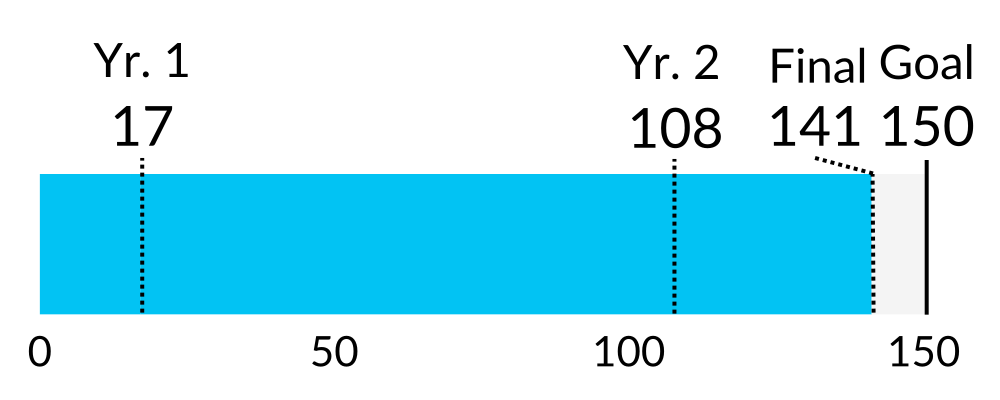
Indicator 14
Number of workers receiving wage increase.
Number of CDA-seeking teachers receiving a wage increase.
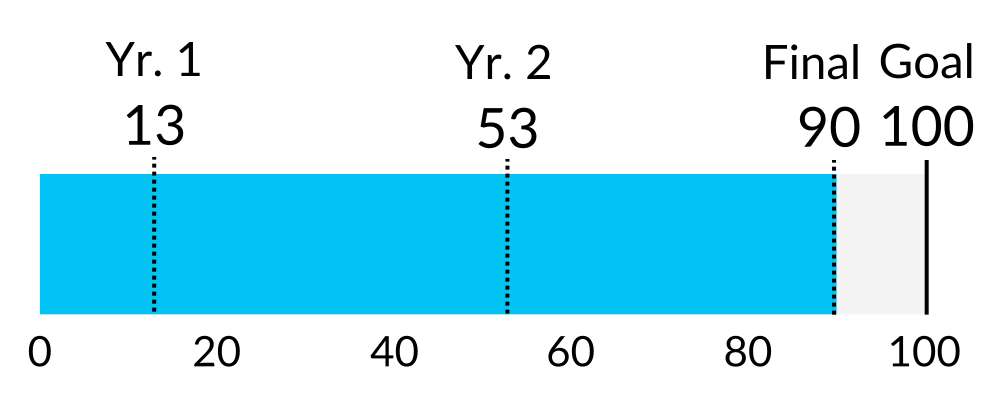
Despite these gains, however, ECE workers in NOLA C.A.R.E.S. — and across the field — still make far less than they deserve.
The goal of $18/hour established prior to recent inflation is far lower than the $23.10/hour (plus increases with each year of experience) recommended by a compensation-focused “Tiger Team” research effort in 2022. In real life, project data shows some experienced teachers still making as little as $9/hour. Others, having invested the time and effort to attain their CDA, have not yet seen a raise. From this standpoint, even $18 can seem frustratingly far – and the work, more often than not without paid medical leave, health benefits, reliable coverage for professional development, or classroom support for children with disabilities, can feel more difficult than ever.
Indicator 15
Number of employers engaged.
Number of organizations represented in the Equity at Work cohort plus the number of ECE businesses/organizations employing CDA candidates.
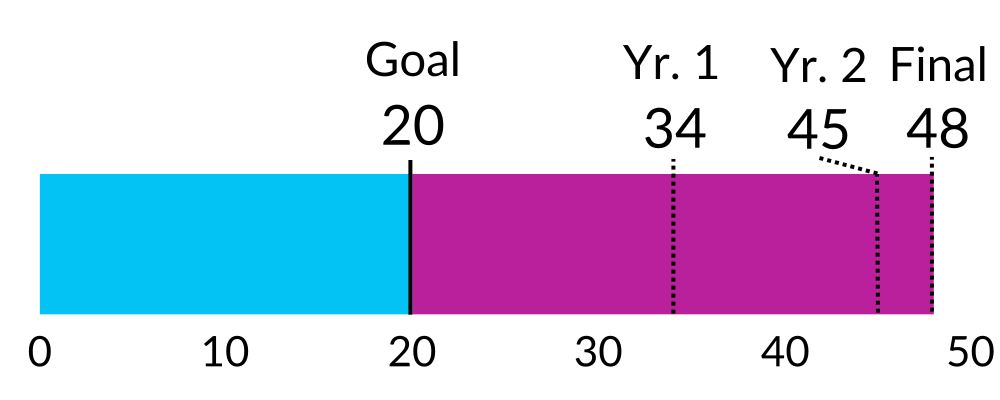
It’s an industry-wide challenge, and solutions have to come from multiple sectors.
ECE workers must rely on their employers to increase their wages, promote them to lead teacher positions (when available), verify their eligibility for city-sponsored stipends, and recommend them for the Early Childhood Ancillary Certificates, which position credentialed lead teachers to receive, on average, $2900 annually in tax credits. Center owners are only able to increase wages when revenue increases support that action. Public policy that values caregiving, as well as support from businesses that employ working parents, is necessary to make meaningful change.
Number of PAResearchers.
Number of people who enroll in Participatory Action Research program.

Most of those enrolled in Participatory Action Research training completed the program, and many have shared their knowledge.
All but 6 of the 31 people who enrolled in Participatory Action Research training have met the threshold for program completion, and several have continued on in the program to deepen their research, advocate for policy change, and guide others new to the practice. These researchers have contributed important knowledge regarding issues facing ECE workers and their communities.
Small Business Expansion
At the project’s close, NOLA C.A.R.E.S. awarded $984,375 in facilities expansion funds to 23 Black and Latine women entrepreneurs.
An additional 18 received peer-to-peer coaching services that helped participants access additional funding streams, strengthen their financial practices and improve their credit worthiness, and advocate for themselves and their peers.